Educational content for trained professionals. Not a Safety Data Sheet, not medical advice. In an emergency, call your local poison control or emergency services immediately. Terms of use.
Trisodium Nitrilotriacetate
Also known as: TRISODIUM NITRILOTRIACETATE · 5064-31-3 · Nitrilotriacetic acid trisodium salt · Trisodium NTA
- CAS No.
- 5064-31-3
- Formula
- C6H6NNa3O6
- Molar mass
- 257.08 g/mol
- PubChem CID
- 21152
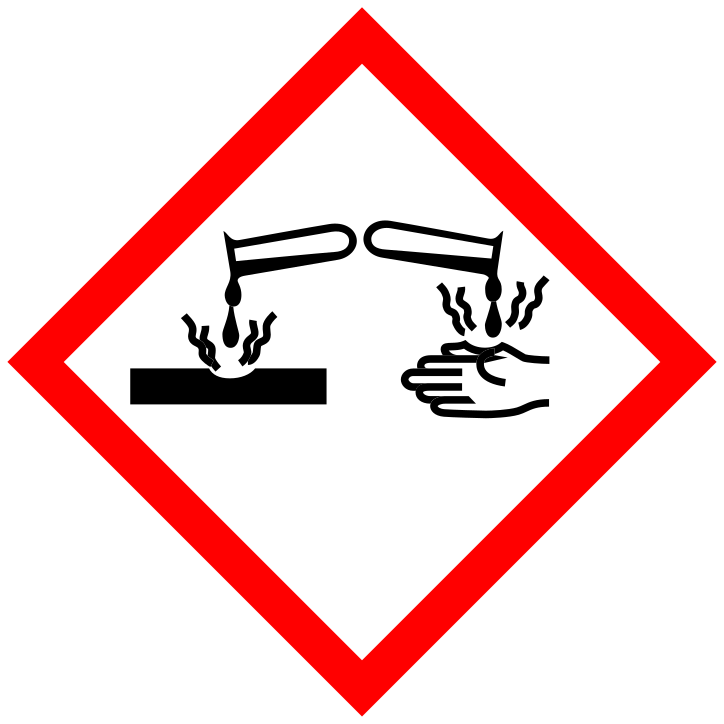 Corrosive
 Harmful / Irritant
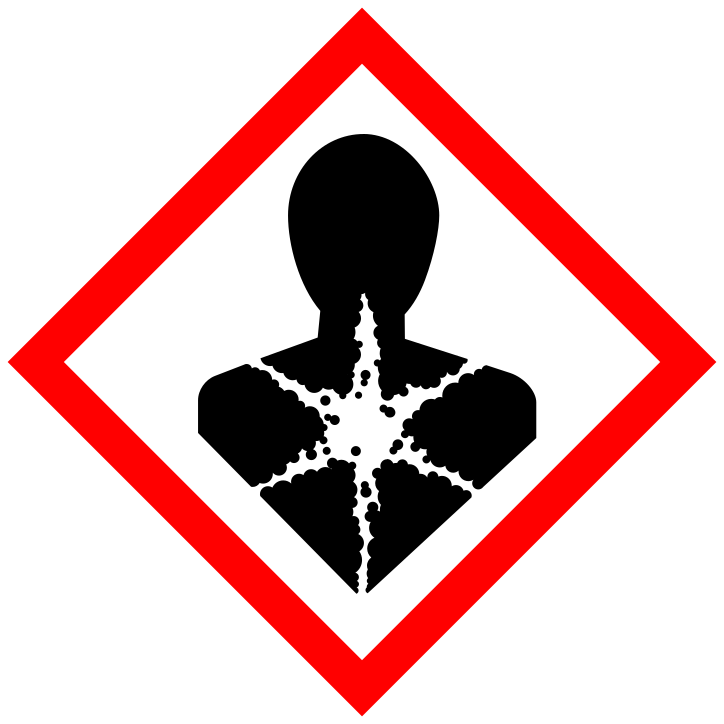 Health hazard
Summary
Trisodium Nitrilotriacetate (C6H6NNa3O6), CAS 5064-31-3. Common in labs and industry. Read on for hazards, storage, PPE and mixing rules.
Background
Loading background from Wikipedia…
Physical properties
Sourced from PubChem Experimental Properties. Values may vary between sources and conditions.
Hazards
Attacks skin, eyes and materials.
May cause skin, eye or respiratory irritation.
Serious long-term health effects (CMR, respiratory sensitizer).
Hazard statements
- H302: Harmful if swallowed [Warning Acute toxicity, oral]
- H319: Causes serious eye irritation [Warning Serious eye damage/eye irritation]
- H351: Suspected of causing cancer [Warning Carcinogenicity]
- H290
- H371: May cause damage to organs [Warning Specific target organ toxicity, single exposure]
- H373: May causes damage to organs through prolonged or repeated exposure [Warning Specific target organ toxicity, repeated exposure]
- H402: Harmful to aquatic life [Hazardous to the aquatic environment, acute hazard]
Storage
Keep at room temperature, below 30 °C, out of direct heat.
Store somewhere well-ventilated and away from any ignition source.
Metal drums or tinted glass, tightly sealed.
Strong acids, strong bases and powerful oxidizers.
Personal protective equipment
Nitrile or butyl, at least 0.4 mm thick.
Safety goggles with side shields.
A2 organic-vapor cartridge if the room isn't well ventilated.
Occupational exposure limits (HSE)
Loading NIOSH / OSHA exposure limits…
EU harmonised classification (ECHA C&L)
Loading ECHA C&L (CLP Annex VI)…
Transport
Loading transport data from PubChem…
FDA recalls & enforcement
Searching OpenFDA enforcement reports…
Compatibilities
Try the compatibility checker in Free tools.
Compare
Put this chemical against another one.
Open comparator with Trisodium NitrilotriacetatePractical safety notes
- Corrosive. Wear chemical goggles, faceshield and chemical-resistant gloves. Have an eyewash within reach.
- Irritant / harmful. Ventilate the workspace and avoid skin contact.
- Serious health hazard (carcinogen, mutagen, reprotoxic, respiratory sensitizer). Substitute if possible; otherwise closed systems and medical surveillance.
Derived from the GHS classification shown above. These notes are generic guidance and do not replace the manufacturer's SDS or your local risk assessment.
FAQ
Is Trisodium Nitrilotriacetate flammable?+
Trisodium Nitrilotriacetate (CAS 5064-31-3) does not carry the GHS02 flame pictogram in our records. Always confirm with the manufacturer's SDS section 9 (flash point) before assuming a product is non-flammable.
What PPE should I wear when handling Trisodium Nitrilotriacetate?+
Chemical-splash goggles and a faceshield, chemical-resistant gloves (nitrile or butyl) and an apron are the minimum. Work inside a fume hood or use a suitable respirator. Check SDS section 8 for material-specific breakthrough times.
How should Trisodium Nitrilotriacetate be stored?+
Store Trisodium Nitrilotriacetate (CAS 5064-31-3) in tightly closed original containers, in a cool, dry, well-ventilated area away from incompatible materials. Segregate acids from bases and keep away from metals that can be attacked.
Is Trisodium Nitrilotriacetate dangerous for the environment?+
No specific environmental pictogram (GHS09) is listed in our records for Trisodium Nitrilotriacetate, but any chemical waste should be handled through your site's hazardous-waste procedure, not poured down the drain.
Where can I find the official Safety Data Sheet for Trisodium Nitrilotriacetate?+
Official, up-to-date SDS documents are published by each manufacturer (Sigma-Aldrich, Merck, Thermo Fisher, VWR, Carl Roth, etc.) and by regulators such as ECHA and NIOSH. This page is an educational summary and does not replace the manufacturer's SDS.
Ask about this product
AI-generated content may be inaccurate or outdated. Do not rely on it for emergency response, medical treatment, or regulatory compliance decisions. Terms of use.
Try one of these, or ask anything about this compound.
AI answers can be wrong. Always check the official SDS for definitive safety information.
Reference information only. Not a Safety Data Sheet. Always consult the manufacturer's official SDS and your local regulations before handling, storing or transporting any chemical. Terms of use.